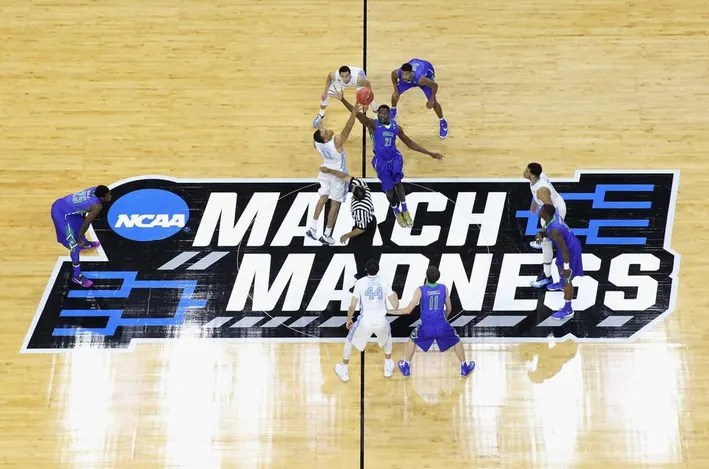
College basketball is in a rough spot.
The NIL era began in 2021 following the NCAA’s decision to allow players to profit off their name, image, and likeness, and so far, it hasn’t been great.
In the past, it was common to witness players transfer schools, but it had nothing to do with compensation. If the fit wasn’t ideal, a player would seek a fresh start elsewhere in an attempt to maximize his four-year collegiate window and set himself for success at the next level.
Nowadays, it’s all about who can offer the most money, causing many to lose sight of what college basketball is all about (finding the right system).
Take Nijel Pack, for example. The 5-foot-10 Oklahoma star guard didn’t transfer from Kansas State to Miami in 2022 because he fell in love with the culture and offensive philosophy that Jim Larranaga and the Hurricanes established.
He transferred because Miami offered him a two-year, $800,000 deal to join the program, an offer he couldn’t pass up.
College basketball has become free agency, which explains why the sport has a more professional feel from a negotiating and financial perspective. The old-fashioned recruiting (selling players on playing time/their role with the team) is sadly gone, assuming NIL continues to alter the college basketball landscape.
Additionally, and possibly more concerningly, the NIL era has made it possible for G-League players to sign with colleges and gain an unfair leg up over the rest of the competition in the process.
London Johnson, a 21-year-old former four-star recruit who’s competed with the G-League Ignite and Maine Celtics, made headlines on Oct. 20 by committing to the Louisville Cardinals.
Michigan State head coach Tom Izzo didn’t mince his words on the move while speaking to reporters shortly after the signing.
“Kids aren’t the problem, we’re the problem,” Izzo said. “This was sprung on us again yesterday, where a guy can be in the G League for two or three years and then all of a sudden, he’s eligible.”
“Most of my people knew nothing about it. … I’m not real excited about the NCAA or whoever is making these decisions, without talking to us, just letting it go. They’re afraid they’re going to get sued.”
Izzo, unsurprisingly, is spot on with his assessment. Johnson shouldn’t be the one catching flak for going from the G-League to the NCAA, considering he’s wisely taking advantage of the flawed system the NCAA has recently implemented.
Until a change is made, more players will likely use the unorthodox method to help them enter the collegiate ranks after navigating life in the pros for a limited time.
Can it get any worse than that, you ask? Well, given that the NCAA is normalizing players competing at the college level beyond age 25, there’s certainly more to discuss.
Believe it or not, there is currently a 29-year-old college basketball player with three years of eligibility remaining. Yes, you heard that right. Ramal Bethea landed with the Green Bay Phoenix this past season, and assuming he maximizes the rest of his eligibility, he will begin his professional career at age 32.
Bethea, who spent five years in the military and one season at MiraCosta College before signing with Green Bay, can play collegiately in his late 20s because there’s simply no rule prohibiting him from doing so.
As the 6-foot-9 forward noted in a recent TikTok video, he’s fortunate to be in a position where he can use his NIL earnings to support himself and his family, regardless of his age.
“I want to live a good life and take care of my family and my son and everything, Bethea said. “So, if I can use my body to play basketball at the age of 29 to get my degree and get paid to help take care of my family, why would I not do that?
While it may never happen, it would be in the NCAA’s best interest to implement an age cutoff to prevent older players from taking opportunities away from younger contributors eager to prove their worth.
Arkansas head coach John Calipari said it best during an early-December rant.
“There are a lot of older gentlemen with beards playing basketball in college right now,” Calipari stated. “The one that’s crazy, the guy comes in, and he’s waving to his kids up in the seats. And you’re like, ‘Wait a minute. The guy’s got two kids. He’s still playing college basketball.”
“Crazy thing. He’s using NIL for his first wife’s alimony, and now he’s still playing college basketball. Are we nuts?”
Essentially, Calipiri is acknowledging that things are starting to get out of hand while little to no signs of improvement. In the pre-NIL era, age wasn’t a significant issue, as the players that weren’t within the normal college basketball age range (18-22) were usually only a year or two older.
In the modern era, though, it’s only a matter of time before players 25 and up officially take over college basketball and ruin what used to be among the most entertaining and well-respected sports in existence.
At the end of the day, college basketball is trending downward, and although there are heartwarming success stories that make it appear like NIL has been highly beneficial (Texas Tech star forward JT Toppin reportedly bought his mother a seven-figure bedroom in 2024 thanks to his hefty NIL paycheck), there’s no question the new version of college basketball has done more harm than good.
 Courtside With Caleb
Leave a comment